
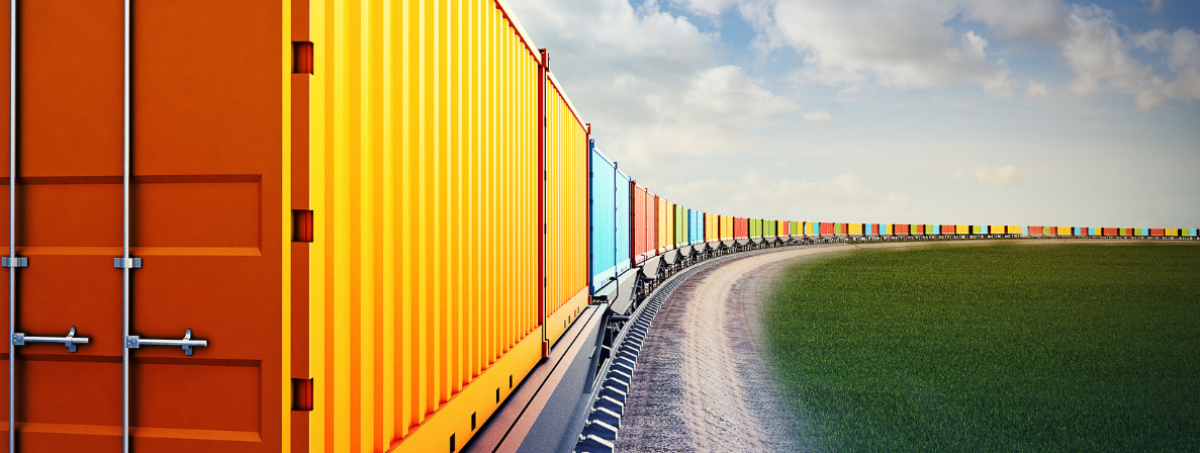
Ireland's freight network is overwhelmingly road-dependent, and that dependency is becoming more expensive. The Keeping Ireland Moving presentation by Iarnród Éireann, published April 2026 by TCD E3, confirms rail freight is entering a significant growth phase: new wagons ordered, an intermodal terminal at Dublin Port under development, the Foynes line opening in 2026, and a proposed all-island freight corridor under consideration. For logistics operators whose transportation costs, fleet management, and warehousing are built around road-only delivery, this is a direct commercial opportunity.
The commercial rationale for modal shift to rail freight is straightforward. Road freight is the most fuel-intensive and emissions-heavy mode of land transport. Ireland's transport sector accounts for 21.8 per cent of national emissions, and HGVs contribute 31 per cent of road transport emissions. The Rail Freight 2040 strategy targets avoidance of 140,000 HGV journeys per year and a reduction of 25,000 tonnes of CO2. For logistics operators where carbon emissions are now a procurement requirement, demonstrable modal shift to rail freight is a contract retention tool.
Ireland's rail freight operational infrastructure is advancing in 2026. The Shannon Foynes freight line is opening in 2026, offering rail connectivity to customers whose container and bulk movements had no viable rail option. Transport Ireland confirms Iarnród Éireann is exploring inland port opportunities to extend rail freight reach beyond existing connections. The intermodal terminal at Dublin Port will enable smoother transfer between sea, rail, and road, improving distribution and operational efficiency.
The Rail Project Prioritisation Strategy, published in December 2025, formally commits for the first time to growing rail freight's contribution to the economy and integrating port and rail infrastructure. This gives logistics and transport operators medium-term planning visibility. Irish Wagon Transport has expanded Dublin Port to Ballina intermodal services, citing rail's role in decarbonising the Irish logistics industry.
Three developments reinforce the commercial opportunity. Rail freight suits bulk and container movements where cost per unit is competitive with road transport, including pharmaceutical, food, and construction materials. Modern intermodal wagons carry standard high cube containers on the Ballina to Dublin Port and Waterford Port lines. The Foynes opening and the proposed all-island freight corridor extend that reach for operators in the west and south of Ireland.
Three actions merit prioritisation. Operators should conduct a freight route assessment to identify which lanes in their distribution and delivery network are candidates for rail or intermodal movement, prioritising bulk shipments and routes where cost and emissions performance matter most. Organisations should engage with Iarnród Éireann Freight and Irish Wagon Transport to assess service availability, container specifications, and total cost of ownership for identified lanes, treating rail freight as a transport management tool. Boards should integrate rail freight assessment into their supply chain management and procurement governance.
Ireland's rail freight network is entering a period of genuine expansion. Operators who engage now, as the Foynes line opens and the strategy creates policy momentum, will reduce their HGV dependency, improve their emissions credentials, and diversify their distribution network before road congestion makes modal shift an obligation.







.png)