

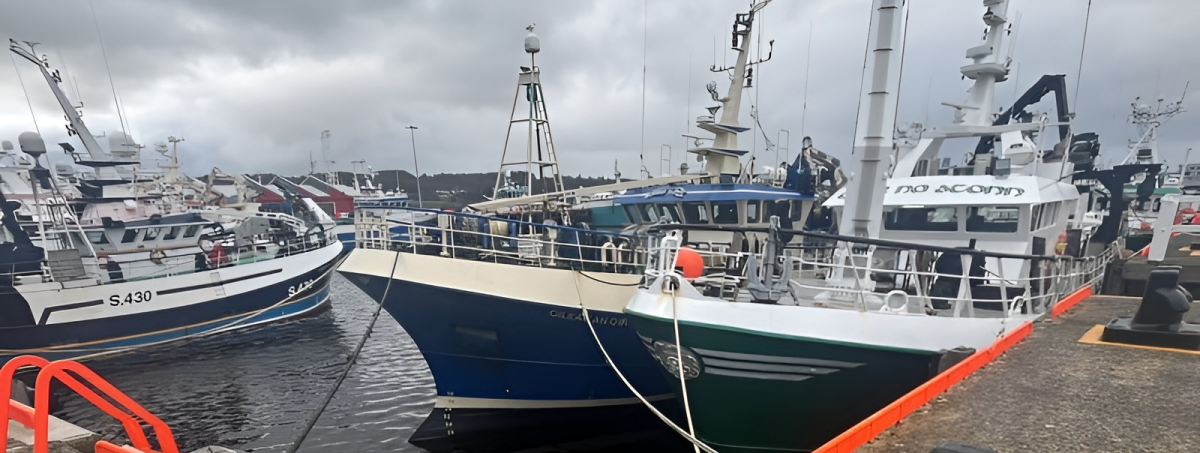
Ireland’s seafood industry is preparing for a crucial week as sector leaders warn that proposed EU quota reductions risk destabilising supply chains central to national logistics and export flows. Representatives from the Seafood Ireland Alliance are meeting Taoiseach Micheál Martin in advance of the December EU Fisheries Council, where 2026 quotas will be finalised.
The alliance estimates next year’s quota cuts could remove €94 million from the sector, with total losses reaching €200 million once processing, transport, and export impacts are included. Industry groups argue that these reductions would ripple across cold-chain operations, port activity, and regional distribution networks.
Scientific advice from the International Council for the Exploration of the Sea has recommended sharp reductions in key stocks, including a 70 per cent cut to the EU mackerel quota, 41 per cent to blue whiting, and 22 per cent to boarfish. Non EU coastal states setting unilateral mackerel quotas have already pushed catches 39 per cent above advised levels on average since 2010, adding further pressure on the negotiations.
Sector leaders warn that Ireland could face a disproportionate hit compared with other member states. Several organisations are now calling for the application of the Hague Preferences, an existing mechanism that grants Ireland a larger share of certain stocks when overall quotas fall below defined thresholds. They argue that without this safeguard, the economic shock could cascade through coastal communities and critical seafood logistics routes.
The government’s engagement with the Seafood Ireland Alliance is seen as a coordinated attempt to secure a fairer outcome. With the Fisheries Council meeting on 11 and 12 December, the decisions taken will shape the viability of fleets, processors, and downstream logistics for the year ahead.
Explore the full analysis to understand what these quota decisions mean for Ireland’s wider supply chain.









.png)