

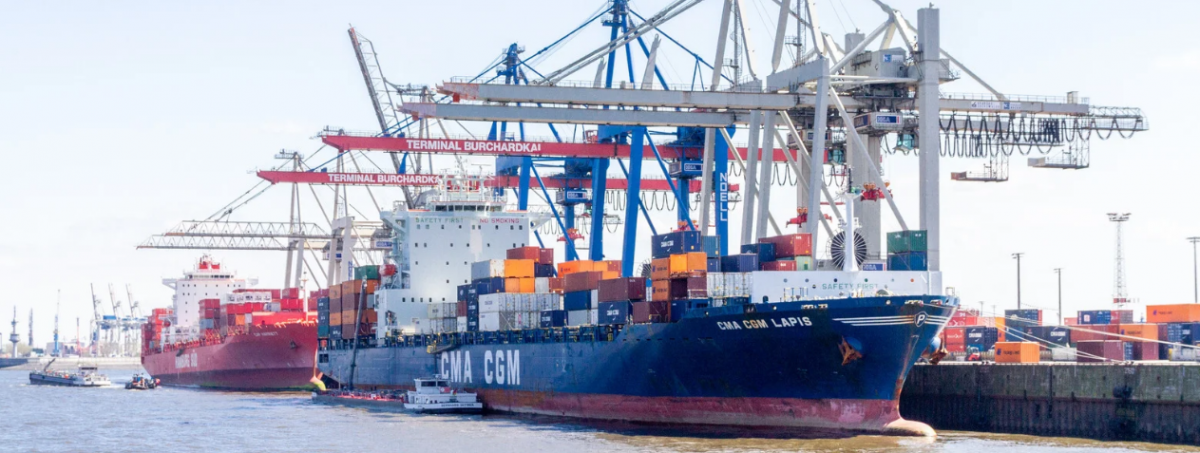
Ninety per cent of Ireland's traded goods pass through Irish ports, making port infrastructure the most critical node in the national supply chain. Shannon Foynes Port has unveiled a €32 million expansion co-funded by the EU Connecting Europe Facility, delivering a 117-metre jetty extension and one of Ireland's largest port logistics parks at 38 hectares with planning permission for 127,000 square feet of warehousing. This is positioned in the Shannon Foynes Port Vision 2041 strategy as a freight logistics cluster to decongest the Irish supply chain. For logistics and transport operators whose delivery, distribution, and warehousing are built around the Dublin-centric freight model, this is a direct commercial opportunity.
Shannon Foynes is one of Ireland's three Tier 1 ports, handling freight for the pharmaceutical, agri-food, construction, and energy sectors. Minister Lawless confirmed the works are enablers of a new era of growth, with the Shannon Estuary targeted as an international supply chain hub. EU Connecting Europe Facility co-funding confirms this qualifies as European strategic freight infrastructure. For logistics operators, proximity to Tier 1 port logistics infrastructure is increasingly a core procurement requirement.
Dublin Port is developing an intermodal terminal with Iarnród Éireann, improving transfer between sea, rail, and road freight and enhancing supply chain management and transport management. Rosslare Europort is planning a €220 million Offshore Renewable Energy Hub with logistics and warehousing infrastructure servicing up to 1 gigawatt of offshore wind capacity annually. As Ireland's direct ferry link to Continental Europe, Rosslare's expansion creates additional distribution and freight forwarding capacity for Irish logistics operators.
The 38-hectare Shannon Foynes logistics park is the most significant warehousing and operational efficiency opportunity outside Dublin to emerge in the Irish market in a decade. Ireland's National Ports Policy designates Shannon Foynes, Dublin, and Cork as Tier 1 freight infrastructure, meaning port-adjacent investment carries long-term policy support.
For logistics operators whose fleet management and transport management involve multiple transfers between inland depots and port terminals, port logistics park operations directly reduce handling cost and transit time. The pharmaceutical, agri-food, and renewable energy sectors driving freight growth through these ports represent the highest-value commercial relationships available to Irish logistics operators.
Three actions merit prioritisation. Operators should engage with Shannon Foynes Port Company to assess the commercial terms and requirements for the logistics park, treating it as a warehousing and distribution infrastructure decision with the rigour applied to any capital allocation. Organisations should evaluate their freight flows through Shannon Foynes, Rosslare, and Dublin Port to identify routes where co-location with port logistics infrastructure would improve delivery performance, reduce transport management costs, and strengthen procurement relationships. Boards should establish a port logistics framework tracking Tier 1 port expansion timelines and assessing operational efficiency gains from co-location.
Ireland's ports handle 90 per cent of the nation's traded goods and are entering a period of unprecedented infrastructure investment. The logistics and transport operators who establish operational capability within these port logistics clusters will secure supply chain management and distribution positions that competitors entering later will find difficult to replicate.








.png)