
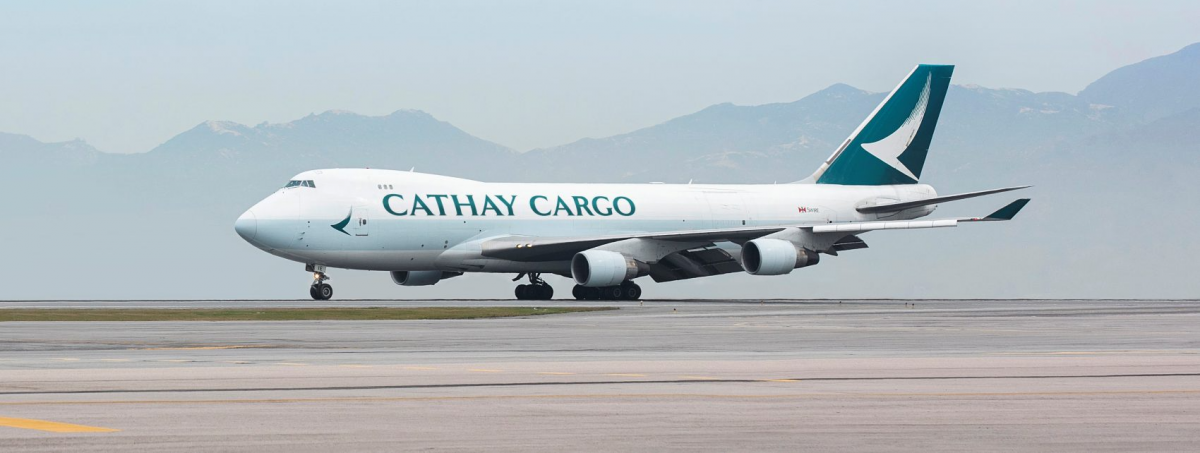
Hong Kong-based Cathay Cargo is relocating its Mumbai freighter operations to the newly opened Navi Mumbai International Airport while refurbishment works take place at Chhatrapati Shivaji Maharaj International Airport, as the carrier continues to adapt its network in response to Middle East airspace disruptions.
According to Air Cargo News, Tim Wong, general manager cargo service delivery at Cathay Cargo, confirmed that the airline's regular Mumbai service will move to Navi Mumbai International Airport during the refurbishment period. Developed by Adani Airport Holdings and CIDCO, Navi Mumbai International Airport commenced domestic commercial operations on 25 December and is set to launch international flights on 15 July.
The carrier has also added Astana, Kazakhstan as an interim stop on its Asia-Europe freighter network, replacing India as the intermediate point for European freighters during the summer season. The change follows Cathay Cargo's suspension of Dubai freighter operations after the onset of the Middle East conflict, which had previously served as the primary mid-point on its Asia-Europe trade lane.
Wong said: "We are moving the intermediate stops for our European freighters from India to Astana until the end of the summer season while our Dubai freighter operations remain suspended. With efforts towards a resolution in the Middle East ongoing, we hope to return to Dubai in the medium term, but we are resuming our freighter service to Riyadh from 1 August."
The addition of Astana as an interim hub aligns with Cathay Pacific's broader plans to launch direct passenger services to Almaty, Kazakhstan in early 2027, signalling a growing commercial interest in the Central Asian corridor across both the cargo and passenger divisions of the group.
Prior to the Middle East conflict, Cathay Cargo operated Asia-Europe freighters via Dubai. The shift to direct flights on this trade lane limited payload capacity, prompting the carrier to seek alternative mid-points as a means of restoring operational efficiency across one of its most commercially significant freight corridors.








.png)