

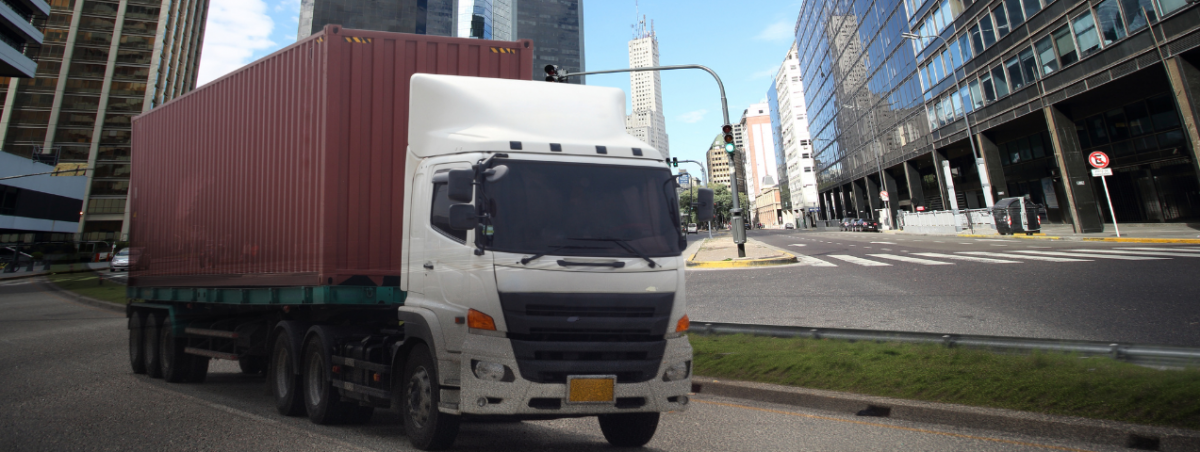
Dublin's streets are under mounting pressure from delivery vehicles. Economic growth, rising e-commerce, and a dense urban street network have made last-mile delivery one of the most expensive challenges in Irish logistics. The World Economic Forum Lessons from the Last Mile report, October 2025, confirms last-mile delivery accounts for 60 to 70 per cent of total parcel delivery cost. For Irish logistics operators with urban delivery volume, this is a commercial problem that conventional fleet management and distribution strategies can no longer solve.
The commercial case for last-mile redesign is grounded in cost reduction and regulatory positioning. Out-of-home delivery points, parcel lockers, and microhubs reduce cost per delivery by cutting van movements and enabling modal shift to cargo bikes. Home delivery's share of European parcel volume has fallen from 66 per cent to 54 per cent in a single year, according to nShift, published in December 2025. For Irish logistics operators whose supply chain management was built around home delivery, this shift creates a cost opportunity and an adaptation requirement.
The operational evidence for consolidation centre models is now peer-reviewed. A freight consolidation pilot in Gothenburg, published in MDPI Vehicles in April 2026, confirmed urban freight consolidation can reduce truck deliveries by up to 30 per cent when operators align around a consolidation point. The pilot used an electric fleet for final-mile delivery with goods consolidated at a microhub, confirming last-mile consolidation improves operational efficiency and enables measurable sustainability gains.
Dublin has already identified consolidation as a strategic priority. Smart Dublin has engaged with micro-hub models as a mechanism for zero-emission delivery modes. The Smart Dublin programme has examined how micro-hubs serve as distribution nodes from which cargo bikes and electric vehicles complete deliveries, removing vans from congested streets. Dublin's medieval street pattern and limited kerbside access make consolidation particularly relevant.
The regulatory direction of travel will reinforce this commercial logic. Low-emission zones are being introduced across European cities, with Dublin expected to introduce access restrictions on higher-emission vehicles within the decade. Operators who begin redesigning their delivery and distribution networks, incorporating microhub assessment, out-of-home delivery partnerships, and fleet electrification, will be better positioned when restrictions apply. The WEF Transforming Urban Logistics framework confirms urban consolidation centres and low-emission vehicle fleets as the emerging standard for sustainable urban freight.
Three actions merit prioritisation. Operators should conduct a route-level analysis of their delivery volumes to identify zones where microhub-enabled distribution would generate the greatest reduction in cost per delivery. Organisations should engage with Smart Dublin on the urban logistics policy framework, positioning as early partners in consolidation infrastructure. Boards should evaluate procurement partnerships with out-of-home delivery network providers, assessing how parcel locker integration improves first-attempt delivery rates.
Dublin is one of Europe's fastest-growing urban economies, and its logistics and transport infrastructure is absorbing the consequences of that growth in real time. Operators who treat last-mile redesign as a commercial investment in operational efficiency and fleet management will be better placed than those who manage the final kilometre as an unavoidable cost.
(The views expressed by the writer are his/her own and do not necessarily reflect the views or positions of BusinessRiver.)





.png)